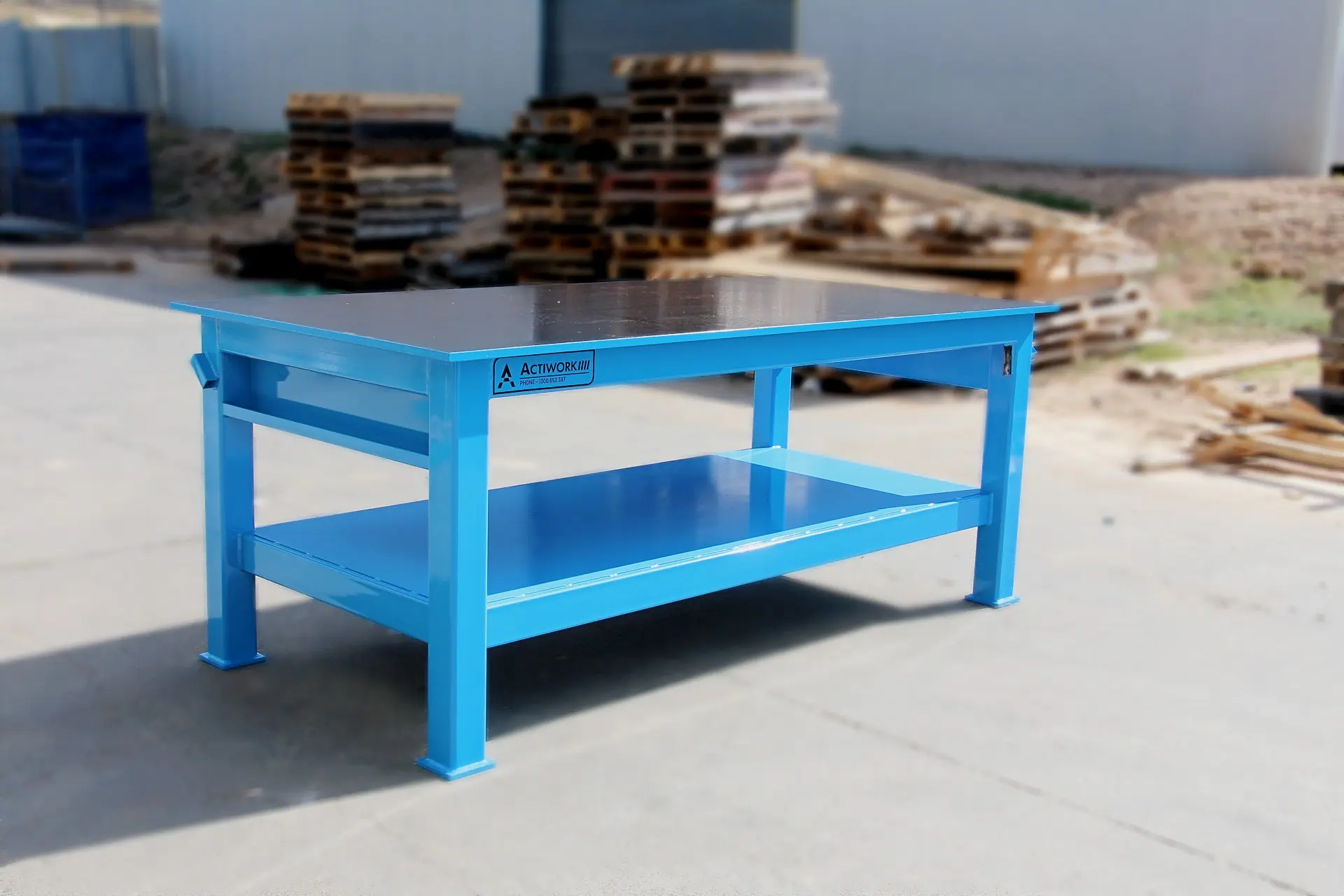
A heavy duty work bench is a sturdy and durable workbench designed to withstand heavy use and support demanding tasks. It typically features a solid steel frame, a thick and robust work surface, and adjustable legs for stability on uneven surfaces.
Heavy duty work benches are essential for various industries and workshops, including automotive repair, construction, manufacturing, and woodworking. They provide a stable and secure platform for performing tasks that require high force, precision, and durability. These workbenches are built to endure heavy loads, impacts, and frequent use without compromising their structural integrity or performance.
The key benefits of using a heavy duty work bench include enhanced safety, increased productivity, and improved ergonomics. They ensure a stable and secure work surface, reducing the risk of accidents and injuries. Their robust construction allows users to apply significant force and torque without worrying about damaging the bench. Additionally, adjustable legs and ergonomic designs promote proper posture and reduce strain during extended work sessions.
1. Sturdy Frame
A sturdy frame is a defining characteristic of a heavy duty work bench. It provides the foundation for stability and ensures the workbench can withstand heavy loads and demanding tasks. The frame is typically constructed from high-quality steel, providing exceptional strength and durability. It is engineered to resist bending, warping, or collapsing under pressure, ensuring a stable and reliable work surface.
The importance of a sturdy frame cannot be overstated. It allows the workbench to support heavy equipment, tools, and materials without compromising its integrity. This is especially crucial in industries such as automotive repair, construction, and manufacturing, where heavy-duty workbenches are indispensable. A sturdy frame ensures that the workbench can handle the rigors of daily use, including hammering, drilling, welding, and assembling heavy components.
In practical applications, a sturdy frame enables technicians and craftspeople to work with confidence, knowing that their workbench will remain stable and secure. It minimizes the risk of accidents and injuries by preventing sudden movements or collapses. Moreover, a sturdy frame extends the lifespan of the workbench, ensuring it can withstand years of heavy use without compromising its performance.
2. Thick Work Surface
A thick work surface is an integral component of a heavy duty work bench, providing a durable and impact-resistant work area. It is typically made from high-quality materials such as solid wood, steel, or composite materials, ensuring it can withstand heavy use, impact, and wear and tear.
The importance of a thick work surface cannot be overstated. It provides a stable and reliable platform for performing tasks that require force, precision, or the use of heavy tools and equipment. In industries such as automotive repair, construction, and manufacturing, a thick work surface is essential for handling heavy components, hammering, drilling, welding, and assembling equipment.
A thick work surface also enhances safety in the workplace. It helps to prevent damage to tools and equipment, as well as reducing the risk of injuries to the user. By providing a solid and stable work surface, it minimizes vibrations and ensures that tools and materials remain securely in place.
3. Adjustable Legs
Adjustable legs are a crucial component of a heavy duty work bench, providing both functionality and ergonomic benefits. They allow the workbench to be leveled on uneven surfaces, ensuring stability and preventing wobbling or rocking during use. This is especially important in workshops and industrial environments, where floors may not always be perfectly level.
Adjustable legs also contribute to ergonomic positioning, enabling the user to customize the height of the workbench to suit their individual needs and preferences. This is particularly beneficial for tasks that require prolonged standing or repetitive motions, as it helps to reduce strain and promote proper posture. By adjusting the height of the workbench, users can minimize muscle fatigue, back pain, and other discomfort associated with prolonged work.
In practical applications, adjustable legs enhance the versatility and functionality of a heavy duty work bench. For instance, in automotive repair shops, adjustable legs allow technicians to level the workbench on uneven garage floors, ensuring stability when working on vehicles. In construction sites, adjustable legs enable carpenters and builders to set up their workbenches on uneven terrain, providing a stable platform for cutting, assembling, and finishing tasks.
4. High Weight Capacity
A high weight capacity is a defining characteristic of a heavy duty work bench, enabling it to support heavy tools, equipment, and materials without compromising stability or performance. This is a crucial factor in various industries and workshops where heavy-duty workbenches are indispensable.
The importance of a high weight capacity cannot be overstated. It allows the workbench to withstand the demands of demanding tasks, such as hammering, drilling, welding, and assembling heavy components. In automotive repair shops, a high weight capacity ensures the workbench can support the weight of engines, transmissions, and other heavy components during repairs and maintenance. In construction sites, it enables carpenters and builders to work with heavy tools and materials, such as power saws, nail guns, and large sheets of plywood.
In practical applications, a high weight capacity enhances productivity and safety in the workplace. It allows users to handle heavy loads and perform tasks efficiently without worrying about the workbench collapsing or becoming unstable. This reduces the risk of accidents and injuries, ensuring a safe working environment.
In summary, the high weight capacity of a heavy duty work bench is a critical component that contributes to its durability, stability, and functionality. It enables users to work with heavy tools, equipment, and materials with confidence, knowing that their workbench can handle the demands of the task.
5. Durable Construction
Durable construction is a defining characteristic of a heavy duty work bench, ensuring it can withstand the demands of heavy-duty tasks and harsh work environments. It is typically constructed from high-quality materials such as heavy-gauge steel, solid wood, or composite materials, providing exceptional strength, durability, and resistance to wear, tear, and impact damage.
The importance of durable construction cannot be overstated. It ensures that the work bench can withstand the rigors of daily use, including hammering, drilling, welding, and assembling heavy components. In industries such as automotive repair, construction, and manufacturing, durable construction is essential for handling heavy tools, equipment, and materials without compromising the integrity of the workbench.
In practical applications, durable construction enhances the longevity and functionality of a heavy duty work bench. It prevents damage from heavy loads, impacts, and exposure to harsh chemicals or environments. This reduces maintenance costs and downtime, ensuring the workbench remains a reliable and productive asset in the workplace.
In summary, the durable construction of a heavy duty work bench is crucial for its ability to withstand demanding tasks and harsh environments. It provides long-lasting performance, reduces maintenance costs, and ensures the workbench remains a valuable asset in various industries and workshops.
6. Ergonomic Design
In the context of heavy duty work benches, ergonomic design plays a critical role in ensuring user comfort, safety, and productivity. Prolonged use of workbenches can lead to muscle fatigue, back pain, and other musculoskeletal disorders if proper ergonomics are not considered.
- Adjustable Height: Adjustable height allows users to customize the workbench to their individual height, promoting proper posture and reducing strain on the back, neck, and shoulders.
- Anti-Fatigue Matting: Anti-fatigue matting placed beneath the workbench helps reduce discomfort and fatigue caused by prolonged standing, improving circulation and reducing stress on the feet and legs.
- Tool Organizers: Well-organized tool storage systems keep tools within easy reach, minimizing unnecessary stretching and bending, which can lead to muscle strain and repetitive motion injuries.
- Proper Lighting: Adequate lighting ensures good visibility of the work area, reducing eye strain and headaches, and promoting a more comfortable and productive work environment.
By incorporating ergonomic design principles into heavy duty work benches, manufacturers can help users maintain proper posture, reduce strain, and enhance overall comfort and productivity during extended use.
Frequently Asked Questions about Heavy Duty Work Benches
This section addresses common questions and misconceptions surrounding heavy duty work benches, providing clear and informative answers to guide users in making informed decisions.
Question 1: What is the primary advantage of using a heavy duty work bench?
Answer: Heavy duty work benches offer superior strength, durability, and stability compared to standard workbenches. They are designed to withstand heavy loads, demanding tasks, and harsh work environments, ensuring a reliable and long-lasting work surface.
Question 2: What factors should I consider when choosing a heavy duty work bench?
Answer: Key factors to consider include the work surface material, weight capacity, frame construction, durability, adjustability, and ergonomic features. Choose a workbench that aligns with the specific requirements of your tasks and work environment.
Question 3: How can I ensure the longevity of my heavy duty work bench?
Answer: Regular maintenance is crucial for extending the lifespan of your work bench. Keep it clean, inspect it for damage, tighten bolts and screws as needed, and avoid overloading it beyond its weight capacity.
Question 4: Are there any safety precautions I should take when using a heavy duty work bench?
Answer: Always wear appropriate safety gear, ensure the workbench is stable and level before use, avoid overloading it, and never stand or sit on the work surface.
Question 5: What industries or applications are heavy duty work benches commonly used in?
Answer: Heavy duty work benches are widely used in automotive repair, construction, manufacturing, woodworking, and various industrial settings where heavy-duty tasks and durability are required.
Question 6: How do I choose the right size and type of heavy duty work bench for my needs?
Answer: Determine the size of the work surface and the weight capacity required for your tasks. Consider the available space in your work area and choose a workbench that fits comfortably.
Remember, heavy duty work benches are a valuable investment that can enhance productivity, safety, and longevity in various work environments.
For further information on selecting and using heavy duty work benches, refer to the following resources:…
Heavy Duty Work Bench Tips
To ensure optimal performance and longevity of your heavy duty work bench, follow these essential tips:
Tip 1: Choose the Right Work Surface Material
Select a work surface material that aligns with your specific needs. Steel provides exceptional durability and resistance to wear and tear, while wood offers a more traditional and versatile option. Consider the types of tasks you will be performing and the materials you will be working with to determine the best choice.
Tip 2: Consider Weight Capacity
Heavy duty work benches are designed to withstand significant weight, but it’s crucial to choose one with a weight capacity that exceeds your anticipated needs. This ensures stability and prevents overloading, which can compromise the workbench’s integrity.
Tip 3: Ensure a Sturdy Frame Construction
The frame is the backbone of the work bench, providing stability and support. Opt for a heavy-gauge steel frame that is welded or bolted together for maximum strength and durability. Avoid flimsy or unstable frames that may wobble or collapse under load.
Tip 4: Prioritize Durability
Look for work benches with durable construction features such as powder-coated finishes that resist rust and corrosion. Solid work surfaces and reinforced legs ensure longevity and resilience in demanding work environments.
Tip 5: Adjustability for Ergonomic Comfort
Adjustable work benches allow you to customize the height and position to suit your individual needs. This promotes proper posture, reduces strain, and enhances overall comfort during extended work sessions.
Tip 6: Utilize Tool Organizers
Keep your tools organized and within easy reach by utilizing tool organizers. This not only saves time searching for tools but also prevents clutter and reduces the risk of accidents. Magnetic tool holders, pegboards, and drawers are effective options for organizing your workspace.
Tip 7: Maintain a Clean Work Surface
Regularly clean your work surface to remove debris, sawdust, and spills. A clean work area not only improves aesthetics but also enhances safety and prevents damage to tools and materials.
Tip 8: Avoid Overloading
Never exceed the weight capacity of your work bench. Overloading can cause the bench to collapse or buckle, posing a safety hazard and potentially damaging tools and materials. Always distribute weight evenly across the work surface.
By following these tips, you can maximize the performance, durability, and safety of your heavy duty work bench, ensuring it remains a valuable asset in your workshop for years to come.
In conclusion, heavy duty work benches are indispensable tools in various industries and workshops, providing a sturdy and reliable work surface for demanding tasks. By choosing the right work bench and following these tips, you can enhance productivity, safety, and longevity in your work environment.
Conclusion
In conclusion, heavy duty work benches stand as the cornerstone of productivity and durability in various industries and workshops. Their robust construction, high weight capacity, and ergonomic designs make them indispensable tools for demanding tasks. By understanding the key aspects and selecting the right work bench for your needs, you can optimize your work environment and achieve exceptional results.
Embrace the strength and reliability of heavy duty work benches to elevate your work to new heights. Invest in a work bench that empowers you to work efficiently, safely, and with unwavering confidence. Let your heavy duty work bench be the foundation upon which you build your success and forge your creations.